Meme coin trading turned $450,000 in 30 days into a repeatable system for spotting Solana runners
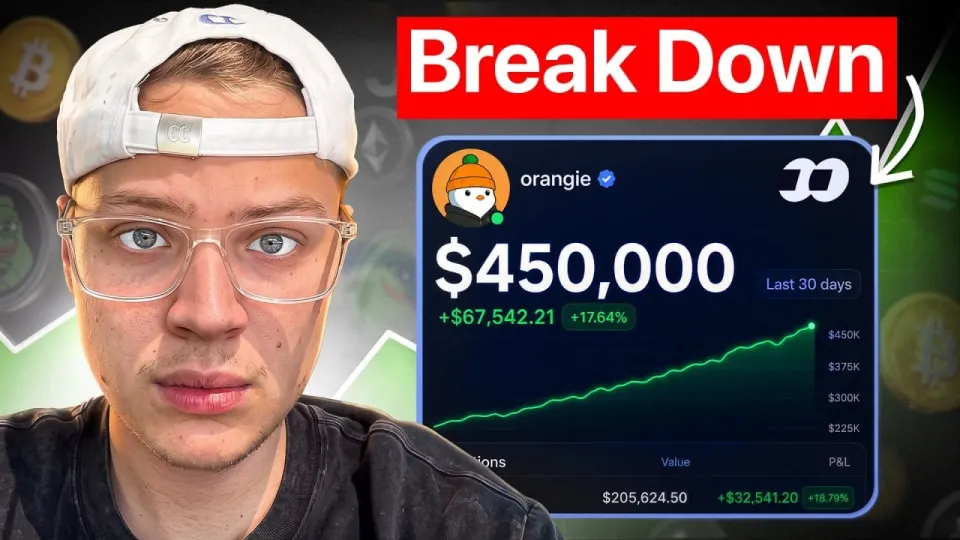
Video: How I Made $450,000 Trading Memecoins in 30 Days
Need articles like this for your video? They help promote it on YouTube and Google — order them in the Telegram bot @sat_sit_bot. The bot writes and publishes the articles itself (with your YouTube video embedded) on popular topical websites (no ads). Try it free: 50 articles on us.
Key takeaways
- Orangie Web3 reports turning $450,000 trading memecoins over a 30-day window, mostly on Solana launches.
- The core edge is speed plus a private group: top traders share calls and snipe the same launches together.
- Most memecoin positions go to zero, so the model is many small losses funded by a few outsized winners.
- Graduated coins (those that survive the bonding curve) are treated as a different, slower game than fresh launches.
- Platforms like FOMO lower the entry barrier, but they do not remove rug risk or the need for an exit plan.
Meme coin trading is the practice of buying tokens with no cash flow, no product and no roadmap, purely on the strength of attention and liquidity flow, and the $450,000 result described by Orangie Web3 over a 30-day stretch came from treating it as a speed and risk-management game rather than an investing one. The traders who survive this niche are not the ones who pick the best story; they are the ones who get in early, size positions so a zero does not end them, and take profit into strength. If you want to follow the same workflow the channel uses, the entry point is the Kaizen group membership, where the calls and the execution routine live.
What a meme coin actually is and why $450,000 in 30 days is possible
A meme coin is a token whose value is derived almost entirely from community attention and trading momentum, which is why its price can multiply in hours and collapse in minutes. On Solana, launchpads let anyone mint a token and seed a bonding curve in a couple of clicks, so supply of new coins is effectively infinite and the scarce resource is attention. That asymmetry explains the headline number: a trader who consistently gets into a handful of launches before the crowd and exits into the first wave of demand can compound small stakes into six figures, while everyone who arrives after the chart goes vertical is providing the exit liquidity. The $450,000 figure is a gross trading result over roughly 30 days, not a salary, and it sits on top of an unknown number of losing positions that funded the winners.
The real edge is information speed, not chart reading
The edge in memecoin trading comes from seeing a launch before the public feed does and from knowing which calls are worth taking. Public commentary on the Orangie video points at exactly this: the trader is part of a private Discord where top traders share calls and snipe the same launches together, which is a structural advantage a solo viewer cannot replicate by watching a chart. Nothing about that is illegal, but it should reset your expectations. If you are trading alone from a phone, you are competing against groups with faster wallets, pre-built sniper bots and a shared list of targets. Your realistic path is not to out-snipe them but to trade the second wave, when a coin has already proven demand and liquidity is deep enough to enter and exit without moving price.
How a memecoin trade is structured from entry to exit
Every profitable memecoin trade follows the same skeleton: a thesis for why attention will arrive, a defined entry, a defined invalidation and a staged exit. The routine looks like this.
- Screen the launch feed for coins with rising unique holders and steady buy pressure rather than a single wallet buying repeatedly.
- Check the contract for mint authority, freeze authority and holder concentration before any money moves.
- Enter a small first position, sized so a total loss is under 2% of the trading bankroll.
- Set invalidation at the level where the launch narrative breaks, and exit mechanically when it hits.
- Sell in tranches: recover the initial stake on the first strong push, then let a remainder run with a trailing stop.
Viewers repeatedly ask for exactly this breakdown, entry, exit and the reason a coin was chosen, and it matters more than any single call, because the process is what survives when a coin does not.
Position sizing and the one-hit model
Memecoin trading is a portfolio of lottery tickets where the majority expire worthless and one or two pay for everything. Traders in the comments describe losing close to 90% of a small starting stake and then recovering multiples on a single runner, and that pattern is the norm, not a failure of skill. The practical rules that follow from it: never risk rent money, keep the bankroll in a separate wallet from your main holdings, cap any single position at a low percentage, and pre-commit to taking the initial capital out early. The math only works if a zero on one coin does not stop you from taking the next ten trades, which is precisely what happens to traders who average down into a dying launch.
Graduated coins versus fresh launches
Graduated coins are tokens that have completed their bonding curve and moved to an open liquidity pool, and they behave differently from fresh launches. They have a public price history, visible liquidity depth and a holder base that has already survived the first shakeout, which makes them slower but more legible. Experienced traders treat graduated names as swing positions with technical levels and fresh launches as pure speed trades with no chart to read. Mixing the two frameworks is a common error: applying stop-loss logic to a token that trades on vibes, or holding a graduated coin hoping for launch-day velocity that has already been spent.
Common questions and mistakes from new memecoin traders
The questions that come up most often from newer traders are about pace, comprehension and recovery after a loss. Many say the material moves fast, and that is a fair criticism of the format rather than of the concepts; the fix is to rewatch specific trade breakdowns instead of trying to absorb everything in one pass. The recurring mistakes are consistent: buying after a vertical candle, ignoring holder concentration, refusing to take a loss on a broken thesis, and treating a single 3x as proof of a system. A trader who tripled a small stake on one coin and lost most of the rest has not found an edge yet, they have had one good outcome. Track every trade, including the losers, and only then judge whether the approach works.
Useful links
- Kaizen group membership — the paid group referenced in the video.
- FOMO trading platform — the execution app used for the trades.
- Orangie Discord — community chat around memecoin calls.
- Orangie on Instagram — short-form updates.
Bottom line
A $450,000 run in 30 days is a real result and also an outlier that depends on group information flow, fast execution and tolerance for many zeros. Treat memecoin trading as a high-variance speculation budget with strict sizing, not as an income plan, and expect the majority of positions to fail. The most transferable lesson from the Orangie Web3 breakdown is procedural: define the entry, define the invalidation, take the stake out early and keep records. If you want the same calls and workflow, start with the Kaizen group membership and paper-trade the process before committing real capital.
Source: How I Made $450,000 Trading Memecoins in 30 Days · Markdown version
Questions & answers
How realistic is making $450,000 from meme coins in 30 days?
It is possible but statistically rare, and it usually requires membership in a group that shares calls and snipes launches together. The headline figure is a gross trading result built on many losing positions, not a repeatable monthly income. Treat it as an upper bound of what speed and risk tolerance can produce, not as a target.
How much money do I need to start trading memecoins?
You can start with a small amount, but the size should be money you can lose entirely without changing your life. The practical constraint is not the minimum deposit, it is position sizing: keep each trade small enough that a total loss does not stop you from taking the next one.
What is the difference between a fresh launch and a graduated coin?
A fresh launch trades on a bonding curve with no price history, so it is a pure speed trade decided by attention and liquidity. A graduated coin has moved to an open pool with visible depth and holders, which makes it slower and more suitable for technical entries and exits.
Why do most new memecoin traders lose money?
They buy after the vertical move, ignore holder concentration and refuse to cut a broken thesis, which turns a small loss into a total one. Others judge their approach on a single lucky multiple instead of tracking every trade. A written entry, invalidation and exit plan fixes most of this.